
November in the Garden: Seed Saving, Shelter, and Holding Life Through Winter
November can feel quiet in the garden — or heavy. Growth has slowed. Frost has likely arrived. Beds look tired, half-finished, or undone. After a long season of climate challenges, it’s easy to wonder what, if anything, still matters.
But November is not the end of the story. It’s a turning point.
This is the month where gardeners shift from growing to guarding, from production to protection. The work now is subtle but powerful: saving seeds, leaving shelter, and choosing not to clear away what still holds life. In natural systems, winter survival depends on what is left behind — not what is removed.
This is where resilience is built.
Helpful Resources: Reading the Season More Clearly
Before we get into hands-on practices, it helps to understand what your garden — and the wider ecosystem — is responding to right now.
Late fall weather patterns influence seed maturity, soil moisture, freeze-thaw cycles, and animal behavior. These tools can help you make sense of what you’re seeing and hearing.
Useful references:
Local extension service fall gardening guides
USDA first frost date tools
NOAA seasonal outlooks for temperature and precipitation
Regional native plant societies (often publish seed-saving calendars)
These references don’t dictate what to do — they help you contextualize what you’re noticing in your own space.
Seed Saving: Choosing What to Carry Forward
Seed saving is one of the most hopeful acts in the garden. It’s a way of saying: this plant belongs here.
In small gardens, seed saving doesn’t need to be exhaustive. Focus on a few reliable plants that performed well under your specific conditions — especially through smoke, excess rain, heat, or cold.
Start with Easy, Open-Pollinated Seeds
Good candidates for home seed saving include:
Calendula
Yarrow
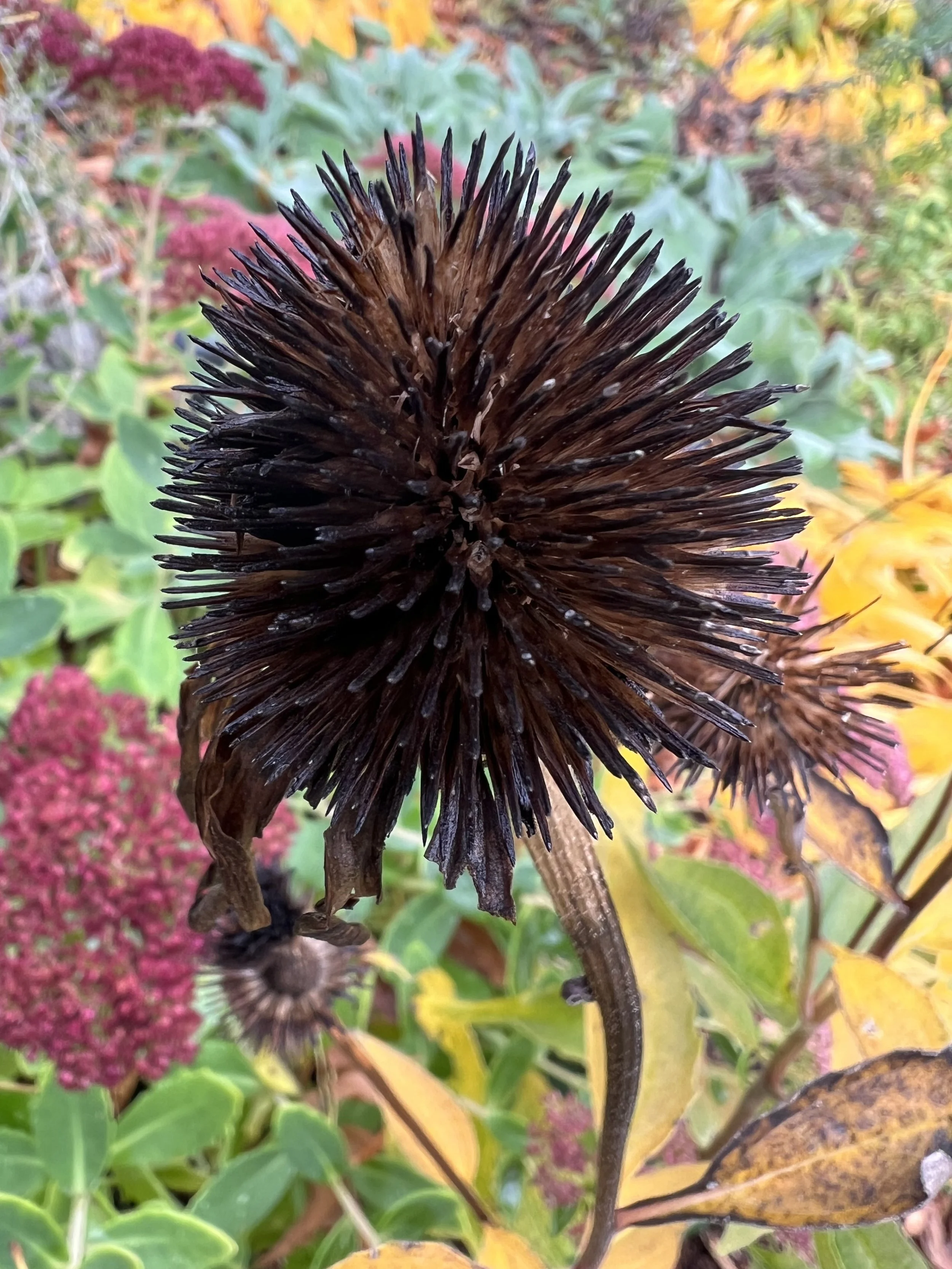
Echinacea
Dill
Basil
Lettuce
Beans and peas
Avoid hybrids unless you’re experimenting — their offspring may not resemble the parent plant.
Simple Seed Saving Process
Let seeds fully mature and dry on the plant
Harvest on a dry day
Remove chaff as best you can
Air-dry seeds indoors for 1–2 weeks
Store in paper envelopes or glass jars
Label clearly (plant, location, year)
You are selecting for resilience without realizing it — plants that survived your weather, your soil, your care.
Winter Habitat: Leaving the Garden Intentionally Messy
One of the most impactful things you can do in November is… less.
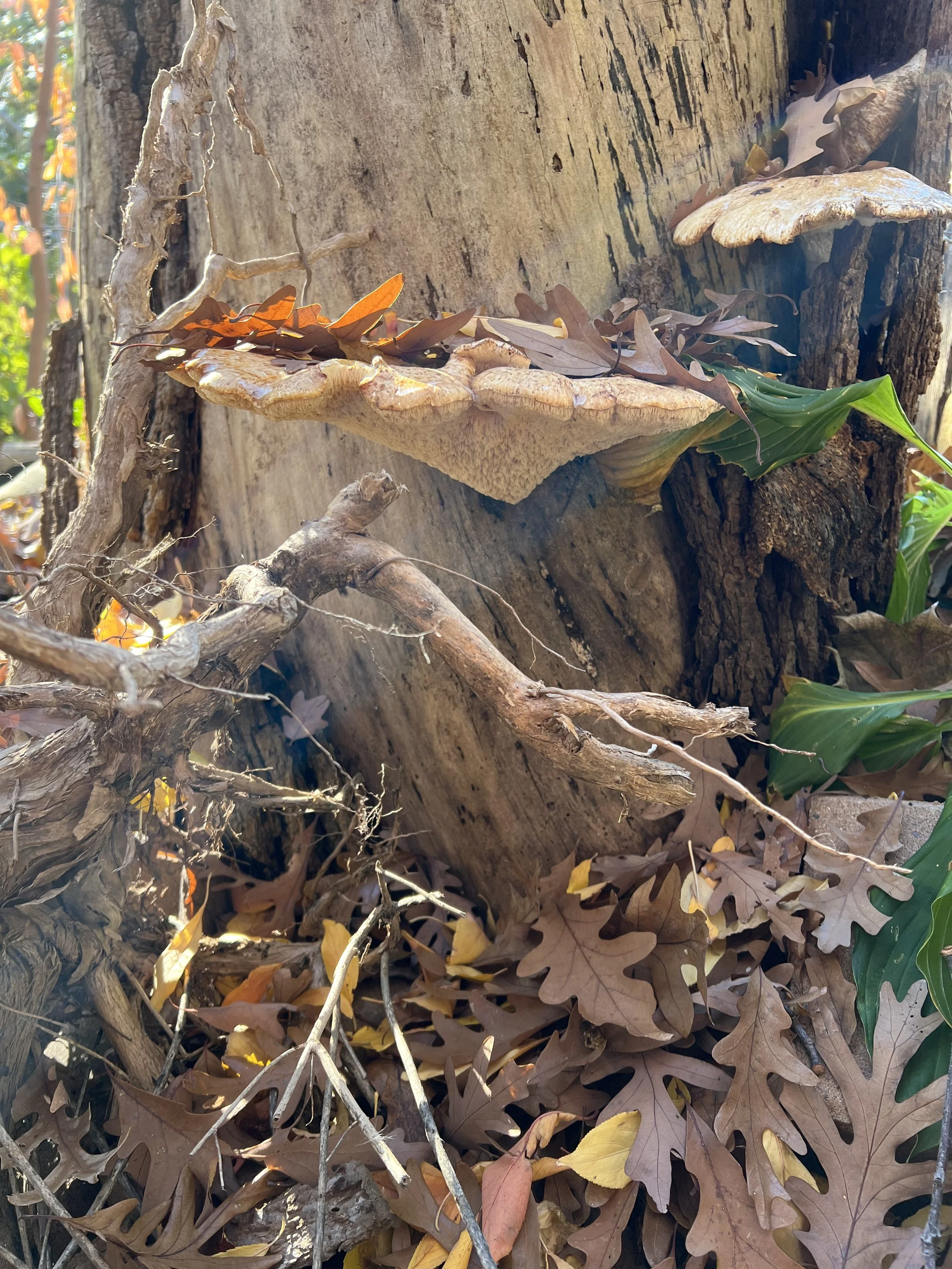
In northern suburban ecosystems, insects, birds, and small mammals rely on what gardeners often remove too quickly: stems, seed heads, leaf litter, and undisturbed soil.
What to Leave Behind
Hollow stems (bee balm, echinacea, raspberry)
Seed heads (coneflower, sunflower, grasses)
Leaf piles under shrubs or trees
Spent perennial growth until spring
These materials provide:
Overwintering sites for native bees
Seeds for birds during food-scarce months
Insulation for soil organisms
Moisture retention during freeze-thaw cycles
Think of your garden less as a tidy space and more as shared infrastructure.
Supporting Suburban Wildlife as Ecosystem Partners
In northern suburban areas, animals are not visitors — they are participants.
Chickadees, sparrows, mice, voles, frogs, beneficial insects, and overwintering pollinators all depend on continuity of habitat. A garden cleared too thoroughly can become a dead zone in winter.
Small actions make a difference:
Leave one corner completely untouched
Stack stems loosely instead of composting immediately
Allow fallen leaves to remain under hedges
Keep seed heads standing as long as possible
These strategies don’t invite imbalance — they restore it.
Storing and Sinking: Holding Water for the Seasons Ahead
Even as the garden quiets, November is an ideal time to think about water memory.
Sink Water into the Landscape
Rain gardens or shallow basins
Deep-rooted perennials that improve infiltration
Mulch and leaf cover to slow runoff
Store Water Thoughtfully
Drain and winterize rain barrels properly
Note where overflow travels during heavy rain
Plan for spring capture during snowmelt
The goal isn’t control — it’s continuity. What falls now can nourish later.
Staying Hopeful Through the Long Pause
For many gardeners, this season has been hard. Smoke, rain, unpredictability, lost yields — all compressed into a short growing window. When you’ve been tending carefully and still feel disappointed, it can take the joy out of planning for next year.
November invites a different measure of success.
If you saved even one seed.
If you left even one plant standing.
If you noticed who stayed in the garden after frost.
Then you’ve done meaningful work.
The garden is not finished — it’s resting. And rest, in natural systems, is not failure. It’s preparation.
Spring will come. And it will come shaped by what you chose to protect.